Se afișează postările cu eticheta NATO. Afișați toate postările

marți, 26 martie 2019

Милитаризация Крыма — прямая военная угроза региональной безопасности

Россия, оккупировав и аннексировав Крым, превратила украинский полуостров в мощную военную базу, которая гарантирует Москве полное доминирование в Черном море. Открытый акт военной агрессии против кораблей ВМС Украины у Керченского пролива 25 ноября 2018 продемонстрировал, что Россия уже готова применить военный кулак, собранный в Крыму, против Украины и других стран Черноморского региона.
Мониторинг ситуации в Крыму в течение пяти лет после оккупации и аннексии Крыма в целом подтверждает предварительные оценки и выводы Центра исследования армии конверсии и разоружения (далее по тексту ЦИАКР) и коллег из экспертной среды: Россия целенаправленно превращает Крымский полуостров на военную базу. Гуманитарный, экономический, экологический аспекты развития Крыма Москву совершенно не интересуют. Уничтожение сельского хозяйства, разрушение экобаланса, отсутствие перспектив обеспечения эффективного снабжения водой и электроэнергией, тупик в развитии курортной отрасли не являются проблемами для оккупантов. Что действительно важно для России — развитие военной инфраструктуры, увеличение авиационного и ракетного компонента, а также корабельного состава оккупационного контингента на полуострове.
Количественные показатели оккупационного группировки в Крыму демонстрируют постоянный рост (оценки ЦИАКР):

miercuri, 6 februarie 2019

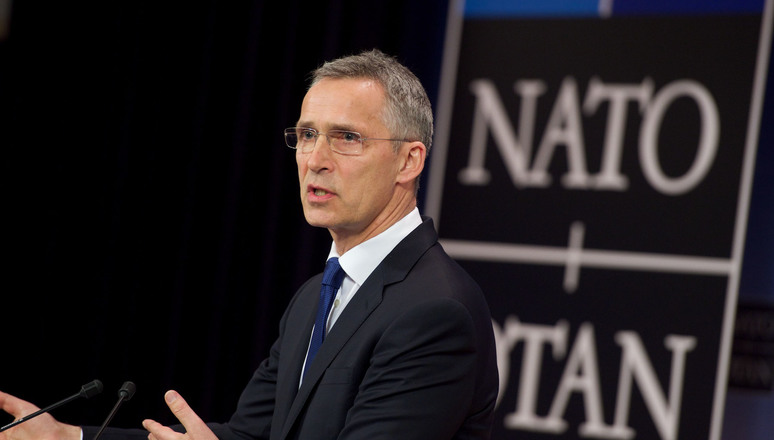
Summit-ul NATO la Londra în luna decembrie 2019


Liderii ţărilor din Organizaţia Tratatului Atlanticului de Nord (NATO) vor organiza un summit în luna decembrie, care va avea loc în Marea Britanie, la Londra, a declarat miercuri Jens Stoltenberg, secretarul general NATO. 
 Sursa foto: https://www.nato.int/cps/en/natohq/opinions_163072.htm

marți, 29 ianuarie 2019

Premieră - România participă la Misiunea Resolute Support în Afganistan

Un detaşament de 60 de puşcaşi marini din Regimentul 307 Infanterie Marină al Forţelor Navale Române  încep din această săptămână detaşarea în teatrul de operaţii Afganistan, după cinci luni de la formarea acestei structuri şi pregătirea specifică pentru zona de operaţii.
Participarea la misiunea Resolute Support este o premieră pentru Infanteria Marină română.
“Infanteriştii marini alături de ceilalţi colegi din cadrul Batalionului de Protecţia Forţei s-au antrenat încă din luna septembrie. Odată cu încheierea selecţiei şi constituirea detaşamentului cu 5 luni în urmă, cei 60 de puşcaşi marini din cadrul Regimentului 307 Infanterie Marină au început pregătirea specifică în vederea dislocării în Teatrul de Operaţii Afganistan. Militarii nostri augmentează structura de forţe a Batalionului 300 Protecţia Forţei <Sfântul Andrei> din Galaţi”, a declarat pentru Monitorul Apărării şi Securităţii (MAS) locotenentul-colonel Dumitru Todosiuc, comandantul Regimentului 307 Infanterie Marină din Forţele Navale Române.
 Locotenentul-colonel Dumitru Todosiuc, comandantul Regimentului 307 Infanterie Marină din Forţele Navale Române

marți, 6 noiembrie 2018

Despre exercițiul multinațional Scorpions Fury 18

(English below)
Aproximativ 1.800 de militari români și străini, cu 250 de mijloace tehnice, participă la exercițiul multinațional SCORPIONS FURY 18 #SCFY18 ce se desfășoară, în perioada 5-16 noiembrie, în Centrul Național de Instruire Întrunită din localitatea Cincu, județul Brașov.


Mai multe imagini de la ceremonia de deschidere a Exercițiului SCORPIONS FURY 2018 le puteți vedea aici.

#SCFY18 are ca obiectiv evaluarea capacității Comandamentului Brigăzii Multinaționale Sud-Est de a-și îndeplini misiunea încredințată - prin exerciții de comandament asistat de calculator, exerciții de antrenament în teren și exerciții tactice cu trageri de luptă - în scopul declarării capabilității finale a acestuia.

La exercițiu participă militari români și străini din Comandamentul Forțelor Terestre Aliate (Izmir, Turcia), Statul Major al Forțelor Terestre, Divizia Multinațională Sud-Est, Centrul Național de Instruire Întrunită, unitățile subordonate Brigăzii Multinaționale Sud-Est (Batalionul 20 Infanterie, Batalionul 22 Infanterie, Batalionul 26 Infanterie, Batalionul 325 Artilerie, Batalionul 205 Apărare Antiaeriană, Batalionul 116 Sprijin Logistic, Contingentul Militar Polonez), precum și din structurile afiliate pe timpul exercițiului (Batalionul 38 Mecanizat din Bulgaria, Regimentul 6 Cavalerie din Italia și Batalionul 2 Pandur din Portugalia).

În același timp, un grup de inspectori militari din Federația Rusă vor inspecta locul desfășurării exercițiul multinațional SCORPIONS FURY 18 #SCFY18. Inspectarea se va face în baza VIENNA DOCUMENT 2011 ON CONFIDENCE- AND SECURITY-BUILDING MEASURES (VD) Documentul de la Viena din 2011 privind măsurile de încredere şi de securitate, care se referă la măsurile de creştere a încrederii şi securităţii (CSBM) în spaţiul OSCE.

NOTA

Comandamentul Brigăzii Multinaționale Sud-Est de la Craiova are misiunea de a asigura comanda și controlul unei operații NATO de tip Articol 5 – Apărare colectivă, de nivel brigadă, pentru a contribui la securitatea teritorială și a populației pe Flancul de Sud-Est al Alianței.


ENG
Multinational Exercise SCORPIONS FURY 18

Around 1800 Romanian and foreign soldiers with 250 vehicles participate in the multinational Exercise SCORPIONS FURY 18 (SCFY18) that takes place from 5-16 November in the Joint National Training Center (JNTC) in Cincu, Brașov County.

The objective of the SCFY18 exercise is to assess the capacity of the Headquarters Multinational Brigade South-East (HQ MNBDE-SE) to fulfill its mission, through computer-assisted command exercises, field training exercises and live fire exercises in order to declare its final capability.

Headquarters Multinational Brigade South- East mission is to provide command and control of NATO operations type Article 5 - Collective defense, at brigade level and to contribute to territorial security and population of the South Eastern flank of The Alliance.


miercuri, 26 septembrie 2018

Key Points of Vilnius Consultations 2018 The Art of Disinformation


Vilnius Consultations 2018 The Art of Disinformation: Lessons Learned and Future Challenges 

Key Points

In response to a recent surge of various forms of disinformation in the Western countries, Vilnius Institute for Policy Analysis chose to dedicate its annual conference Vilnius Consultations 2018 to a search for concrete answers to this challenge. Vilnius Consultations 2018 gathered a number of high-ranking experts from Georgia, Moldova, Ukraine, the Baltic States, Finland, Spain, Israel, and the UK, seeking to draw concrete practical lessons from the experiences of East European countries, especially when dealing with Kremlin’s global information warfare. The following recommendations were proposed. 

Conceptually, we still need to foster a shared understanding of the threats the Western countries face. Unfortunately, there is still a division within the NATO and the European Union on the perception of Russia and its strategic posture. To bridge the gap in understanding, we should: 
  • Refrain from equating the Kremlin regime with the whole Russian nation. Russian society itself is a victim of the Kremlin and Putin’s regime, and we should clearly differentiate between the two when making policy decisions; 
  • We should recognize that Kremlin-controlled media platforms are not real media, but part of Kremlin’s weaponry in informational and hybrid warfare. Practically, this means that the West should not grant these outlets (including Sputnik and RT) the same access to information and other privileges as they do to other media outlets; 
  • We ought to formulate a positive narrative about the West, which would not simply reactively debunk outright lies and conspiracy theories, but have a story to tell of its own. 

In the media domain, we have seen a proliferation of fake news spread by well-funded Kremlin’s media outlets as well as smaller-scale blogs, bots and trolls. To refute this challenge, we should focus on a comprehensive set of technological, economic, and conceptual tools: 
  • We must continue with our fact-checking efforts, while at the same time understanding that by itself it is an insufficient answer to a complex issue. In order to set our own agenda, quality journalism (especially investigative journalism) should be supported as one of the foundations of healthy democracy;
  • We should recognize that “he said, she said” type of journalism is insufficient: the public should be educated to think critically instead of merely informed about different opinions. Manipulative use of dubious information sources falls short of the fair principles of journalism; 
  • Information on media ownership and media funding should be publicly available and the media regulations should be more transparent, especially in the EU Eastern Partnership and Eastern Neighborhood countries, where unknown malign sources might channel large funds to disrupt the media landscape; 
  • Online behavior should be guided by offline normative principles. Just as no respectable media organization would publish a document stolen from someone’s desk, they should come to an agreement not to publish leaked emails or other stolen private digital information; 
  • At the same time, safer communication technologies and cyber-defense mechanisms should be strengthened so as to avoid leaking in the first place. This should start from rather simple steps, such as the use of multi-factor authentication, and heavier investment in cyber-defense and technological innovations; 
  • Social media businesses should be persuaded that automated activity on their platforms are costing them substantial sums of money through fake clicks, ads, and non-existent traffic that the ad-buyers are being charged for. By acknowledging that this online pollution makes their business models appear rather fraudulent (the ad-buyers are essentially paying for fake reach), social media platforms should invest in eliminating all fake activity in all languages. 

From a societal perspective, while the Kremlin itself is not causing societal cleavages in the Western countries, it surely knows how to exploit them. To build societal resilience and immunize the public against digital disruptions, we should: 
  • Focus more on the vulnerable groups, such as ethnic minorities, the less educated, the geographically remote, the impoverished, and the elderly guided by Soviet nostalgia. They predominantly consume news in Russian language and/or are more susceptible to propaganda because of their social standing. Public broadcasters should be incentivized to target those groups by creating more engaging, high-quality content. For the minorities specifically, content should be disseminated in their native language to prevent the Kremlin from fully capturing the informational space; 
  • Russian population should be targeted via the Internet: more Western news could be produced in Russian language in an effort to counter the current imbalance where information in Russian language is predominantly Kremlin-sponsored; 
  • Better education is a key to a strong and resilient society. Critical and informed citizens are groomed starting from the primary school. Media literacy is a crucial competency to have, but before we start promoting media literacy right away, we also need to persuade the public they are in need of improving their media skills. 


Our institutional arrangements should also adjust to new challenges:
  • Since cyber-threats recognize no borders, we ought to establish a new cyber defense alliance, a sort of Cyber-NATO which would transgress the geographical boundaries and encompass all democratic countries threatened by cyberattacks and disinformation, regardless of whether they are members of the EU and/or NATO; 
  • The Russian delegation should not be re-admitted to the Parliamentary Assembly of the Council of Europe if it continues to fail to uphold the territorial sovereignty of other countries and disregard human rights abuses in its own state. Similarly, economic sanctions against the Russian elites and businesses should remain in place;
  • EU’s Eastern flank countries should focus more on promoting their anti-hybrid agenda in the Southern flank (in countries such as Italy and Spain), since strengthening those countries against Kremlin’s propaganda also strengthens the EU as a whole, and thus, reinforces the Eastern flank; 
  • A close network of like-minded analysts and experts from all Western states affected by the expanding threat of hybrid warfare should be established. With the help of such a network, we, the West can stay proactive in our endeavor to counter disinformation at all times instead of merely persuading the public once again that this serious threat actually exists; 
  • All efforts to connect international, governmental, and private initiatives to jointly fight disinformation are welcome, and should be encouraged. 


Vilnius Consultations is an annual conference organized by Vilnius Institute for Policy Analysis in partnership with the Lithuanian Ministry of Foreign Affairs. This year, the event took place on September 13, 2018. These key points were outlined based on panel discussions with participation of Markku Mantila (NATO StratCom Centre of Excellence, Latvia), Nicolas de Pedro (The Institute for Statecraft, Spain), Oleksiy Makukhin, (Ukraine Crisis Media Centre, Ukraine), Yevhen Fedchenko (StopFake.org, Ukraine), Dalia Bankauskaitė (VIPA, Lithuania), Sergiy Gerasymschuk (Foreign Policy Council "Ukrainian Prism", Ukraine), Tamar Kintsurashvili (Media Development Foundation, Georgia), Irakli Porchkhidze (Georgian Institute for Strategic Studies, Georgia), Rosian Vasiloi (Institute for Development and Social Initiatives, Moldova), Simas Čelutka (VIPA, Lithuania), Rolf Fredheim (NATO StratCom Centre of Excellence, Latvia), Urve Eslas (Advisor to the President of Estonia (2006-2016) Toomas Hendrik Ilves, Estonia), Dmitry Adamsky (IDC Herzliya, Isreal), Vaidas Saldžiūnas (Delfi.lt, Lithuania), Lukas Andriukaitis (VIPA, Lithuania), Anton Shekhovtsov (Institute for Euro-Atlantic Cooperation) at Vilnius Consultations 2018. 


Full programme of the event: http://vilniusinstitute.lt/Vilnius-consultations-2018-Program/ 

Video recordings from the event: https://www.youtube.com/watch?v=DurjkKvisdM&t=1s (part 1); https://www.youtube.com/watch?v=RrzrhyIElqU (part 2).

vineri, 23 februarie 2018

Russians in Transnistria Remain Threat to Moldova

Moscow’s intensified troop movements and manoeuvres in the region of Transnistria are putting Moldova’s fragile security architecture at risk, a military expert says.


This interview I gave for the BalkansInsight, for what I thank Madalin Necsutu. More friends have asked me to republish it because not the entire interview is visible on the BalkanInsight page, but only for those who have subscribed.


Enjoy your reading!

vineri, 12 ianuarie 2018

Despre cum luptă Europa cu fake news din Federaţia Rusă şi nu numai

„When distinguishing mis- and disinformation, an important part is to analyse the aim. Sometimes a satirical publication spreads onto real news outlets and thus transforms into fake news.”
„Atunci când facem distincția între ştire falsă şi dezinformare, trebuie să analizăm scopul. Uneori, o publicație satirică se răspândește ca o ştire reală și se transformă astfel în știre falsă.”
NATO STRATCOM CoE

https://euvsdisinfo.eu/
Este al doilea articol din seria tematicii securizării spaţiului informaţional, unde am analizat ultimele evoluţii la nivelul Uniunii Europene în domeniu. Primul articol a fost dedicat Situația curentă din Republica Moldova în domeniu securizării spaţiului informaţional.

miercuri, 3 ianuarie 2018

Calificativul pentru anul 2017, unul căruia nu am ce îi reproșa, dar anul 2018 va fi unul special.

Din interviul pentru curentul.md

Nu a fost unul din cei mai buni ani, dar nu am ce să îi reproșez. Din punct de vedere profesional a fost un an plin de evenimente plăcute. În primul rând am fost invitat să fac parte din echipa experților IDIS „Viitorul”, ceea ce mi-a dat o posibilitate să mă realizez în domeniul politicilor de securitate, pentru ce vreau să îi mulțumesc domnului Ambasador Igor Munteanu. Împreună cu colegii am realizat mai multe cercetări în acest domeniu și impactul lor asupra mediului de securitate la nivel național și regional. Și mă refer doar la câteva din ele, MisiuneaEUBAM – de la asistentă la frontieră la cea de reintegrare a țării”, „Riscuride securitate și apărare în contextul reglementării transnistrene și Frontieraadministrativă și cum o administrăm” și „MEMORIU Măsuri de răspuns la acțiunileprovocatoare din ultima vreme a Grupului Operativ al Trupelor Ruse (GOTR)”. Pentru mine asta a fost un bun început pe care sper să îl dezvolt pe parcursul anului viitor.

Eroii nu mor niciodată - 12 iulie 1992

Să nu uităm  1. Plutonierul de poliție Sergiu Andreev s-a născut la 22 iunie 1971 în satul Cioara, raionul Hâncești, într-o familie de ț...